Technology
A 70% success rate is a zero in the field
70% earns applause in a demo. In the field, 70% means defects and rework three times out of ten. LiOps designs for mastery before generality. Reach 100% on a defined task, then widen task by task. The field's scorecard is yield, not benchmark averages.
LSM
Large Spatial Model
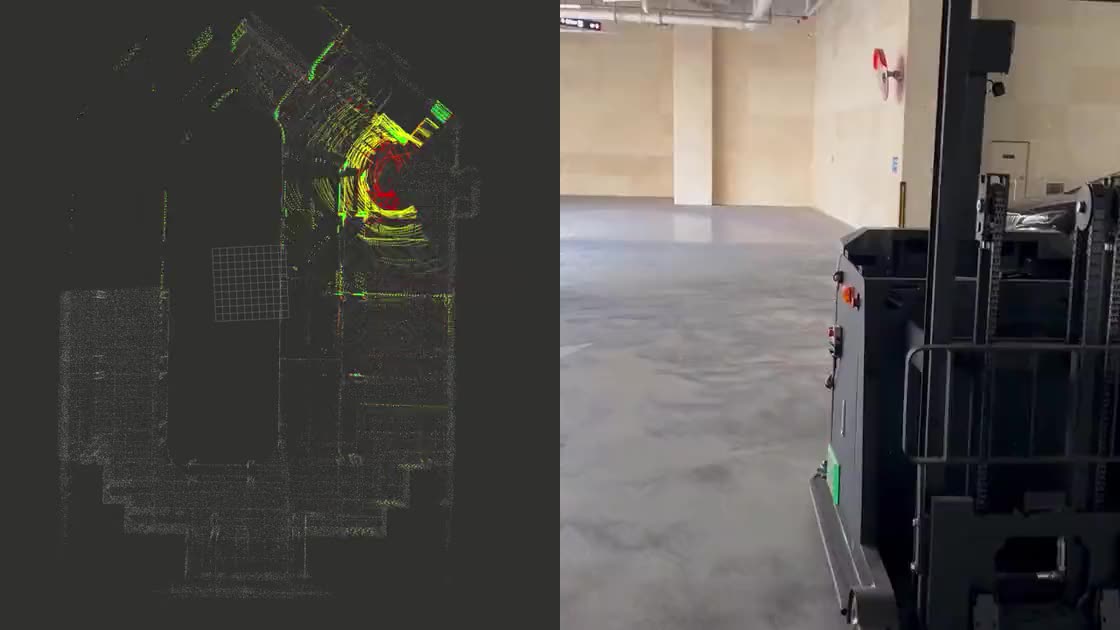
The LSM (Large Spatial Model) is a spatial understanding model trained on large-scale 3D data. It generalizes perception, adapting to unseen sites from a handful of samples. On an autonomous forklift loading task, it demonstrated 100% success from just 10 labels.
Execution is kept stubbornly deterministic. Cumulative error across the entire chain, from perceived coordinates to robot motion, is controlled within 1mm. Because we never split responsibility between perception and execution, we can guarantee quality; and because we can guarantee quality, we can contract on outcomes.

Perceive
Flexible Perception
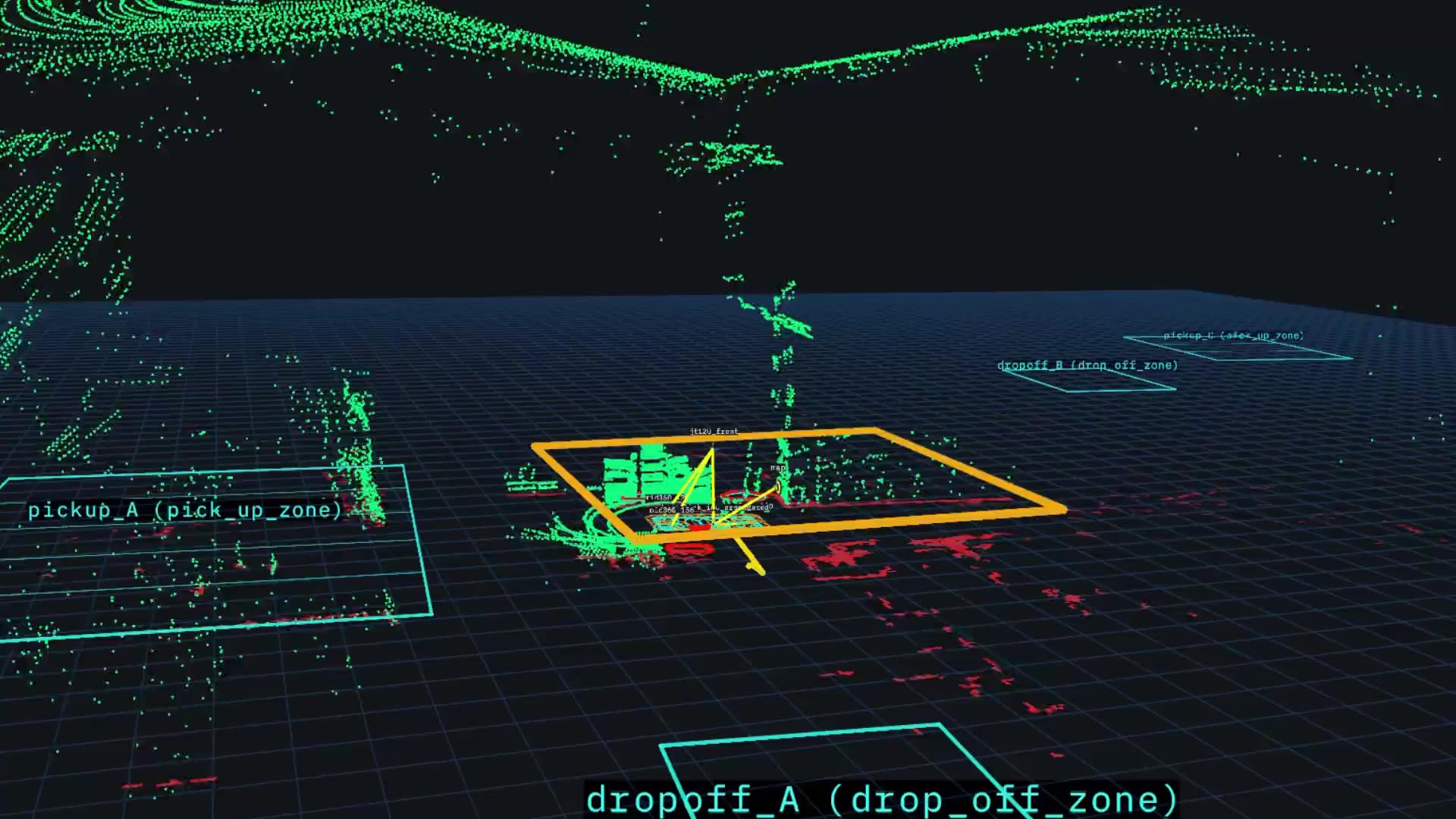
Multi-LiDAR and camera data fuse into one continuous 3D spatial representation. Because the spatial model overcomes sensor noise and occlusion, sensors costing a few hundred dollars replace competitors' sensors costing tens of thousands.
Understand
Spatial Reasoning
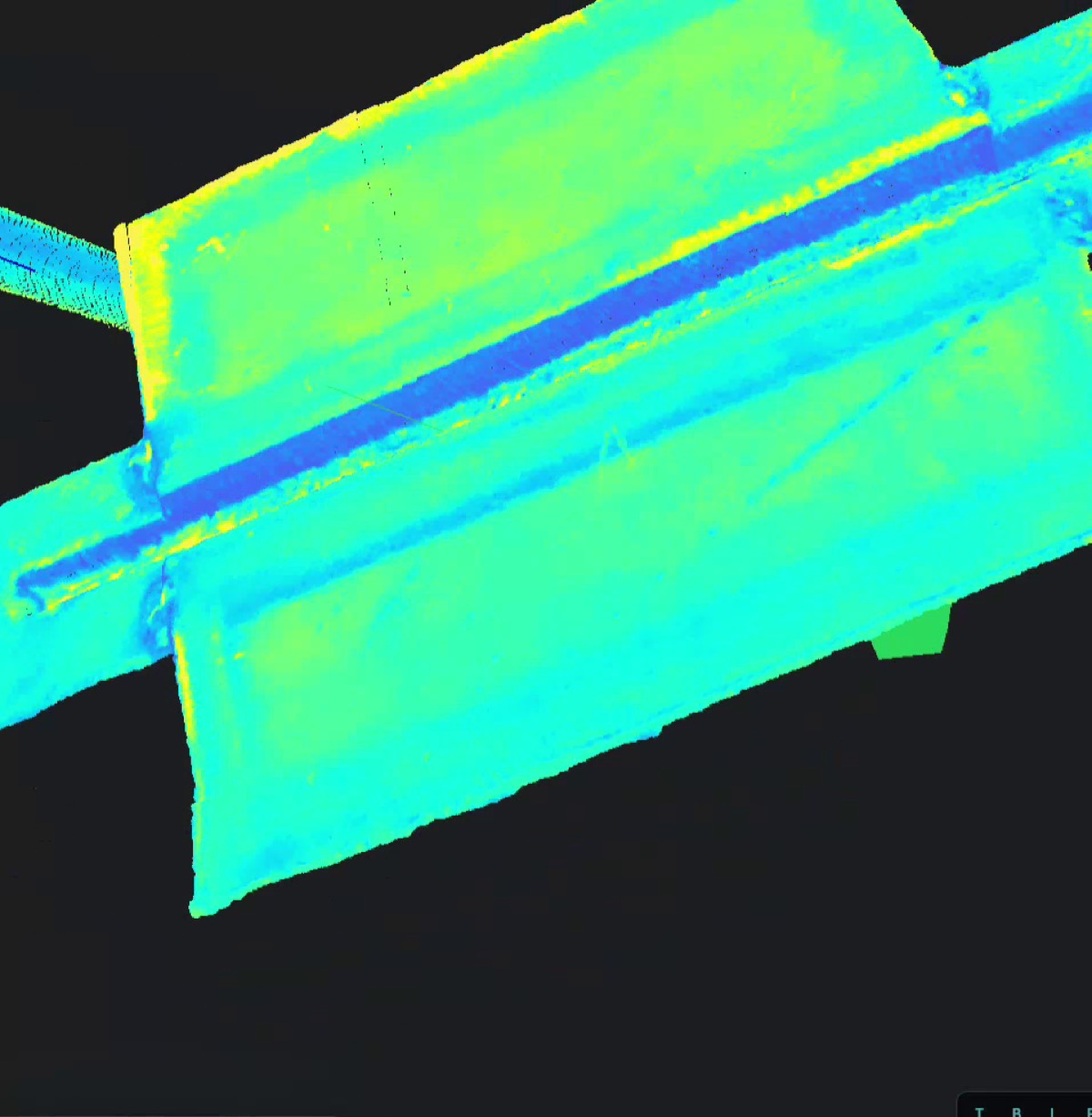
It automatically retrieves and registers the currently visible block against hundreds of CAD drawings to measure progress, and infers weld seams and start/end points on parts it has never seen. No barcodes, no manual matching.
Act
Deterministic Execution
Robots take the perceived coordinates and work without teaching. Cumulative error across sensor, CAD, robot, and tool frames stays within 1mm. It is either complete, or it is not.
Why 3D sensing?
2D camera vision is vulnerable to lighting, reflections, and occlusions. Industrial sites aren't controlled environments.
LiDAR
Large-scale spatial mapping for shipyards and logistics environments. The eyes of Spatial MES.
ToF
Cost-effective precision sensing for weld-point recognition. 1mm precision from sensors costing a few hundred dollars.
Structured Light
High-precision shape scanning for part inspection.

Edge Computing
Edge Architecture
Core inference runs at the edge in industrial environments, ensuring low latency and offline capability. Cloud connectivity is used for learning aggregation and cross-site insights.
Open interface
An open interface, not a closed machine
What stalls automation on site is usually not the technology. It is the connection. Machines speak only their own way, and the customer's engineers have to bend to it. We do the opposite.
We speak your stack
You do not have to adapt to our ROS2 topics. We deliver the data and commands you need in the OS and language you already use. Windows or Linux, your existing perception software runs on top as it is.
Integrate before the machine ships
An interface control document, an SDK, clients per language, sample code, a mock server, test tools, a data dictionary, and a version compatibility policy come with it. Integration can start before the hardware arrives.
Your data stays inside
Drawings, raw LiDAR, SLAM maps, and work results are stored only on the vehicle PC and your own servers. No external cloud transfer, no automatic telemetry.
Internal implementation of our localization and registration algorithms, and the safety control path, stay outside the published interface.
We start where rule-based systems stop
Structured welding, where the seam is geometrically defined, is already done by robots. What remains is the unstructured work only people could do. And in that segment, the competitor is not another automation vendor. It is the worker who cannot be hired.
Learn More